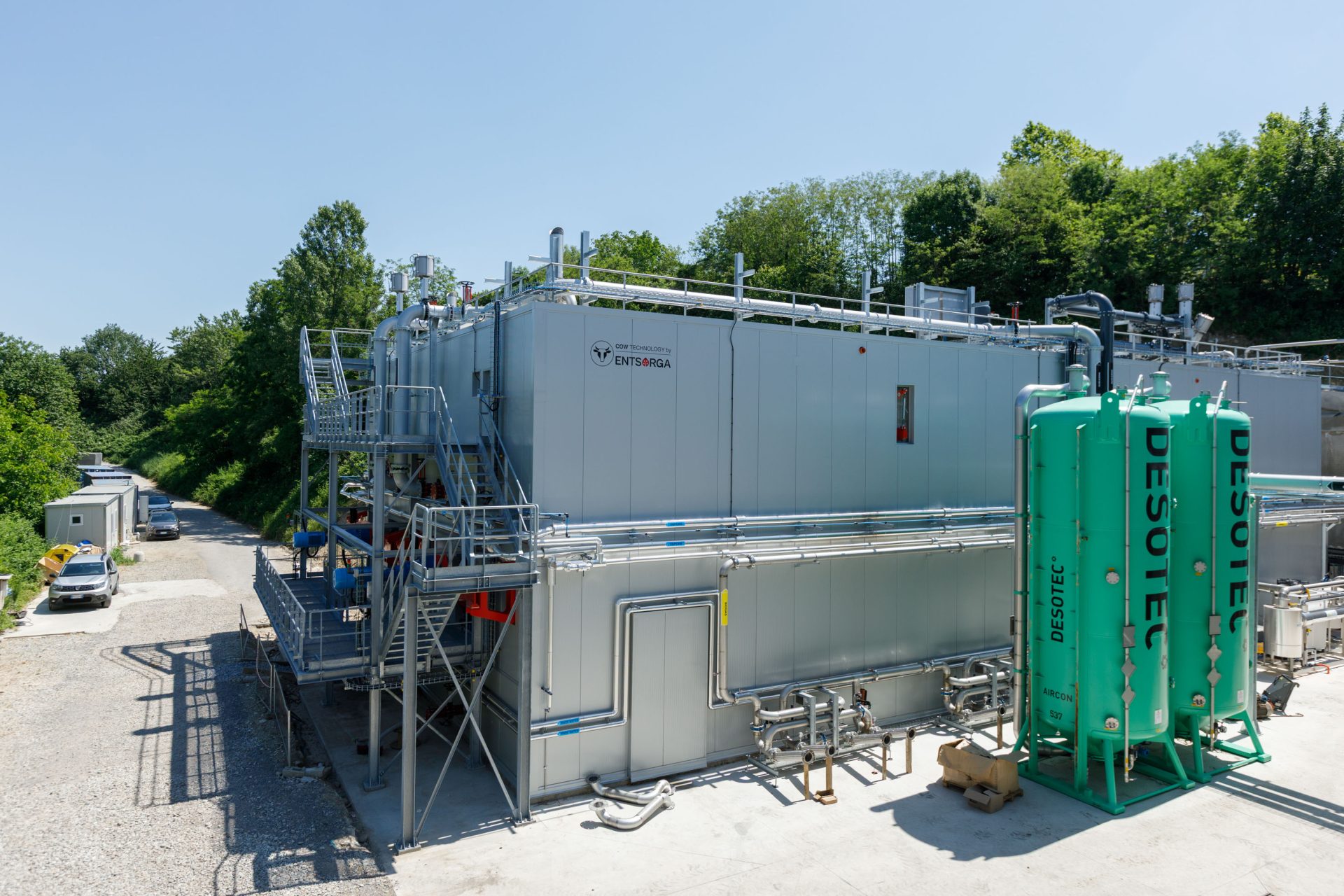
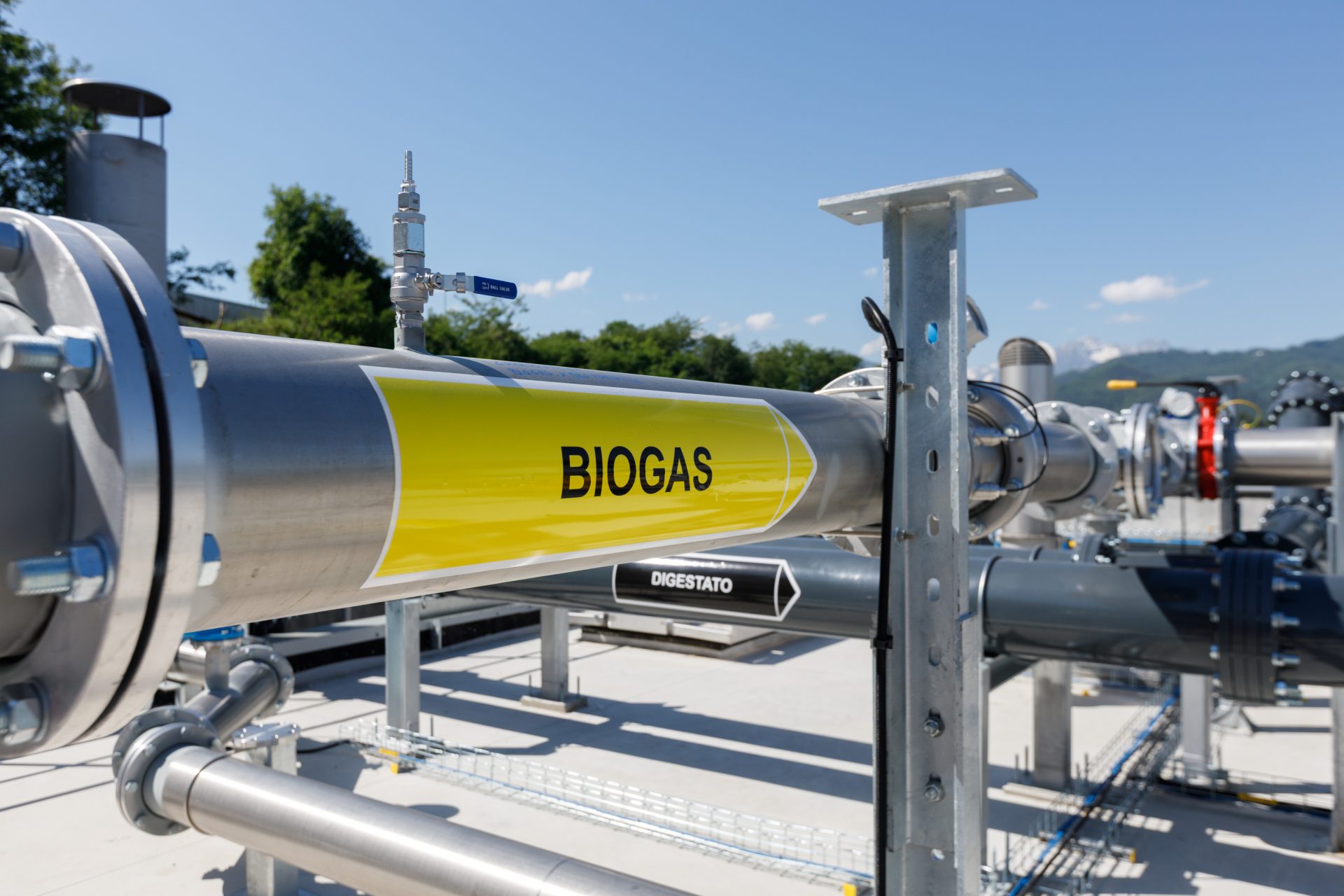
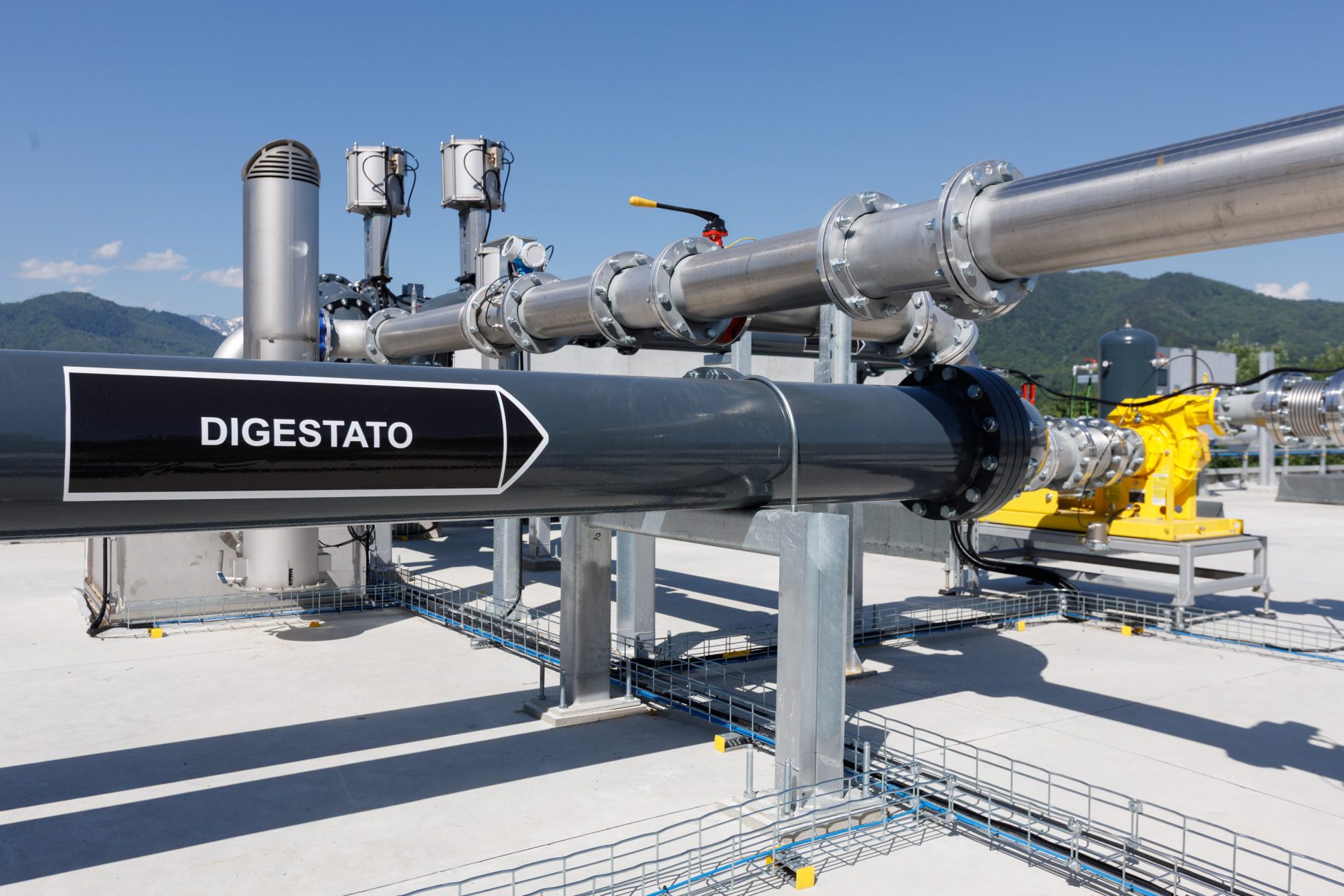
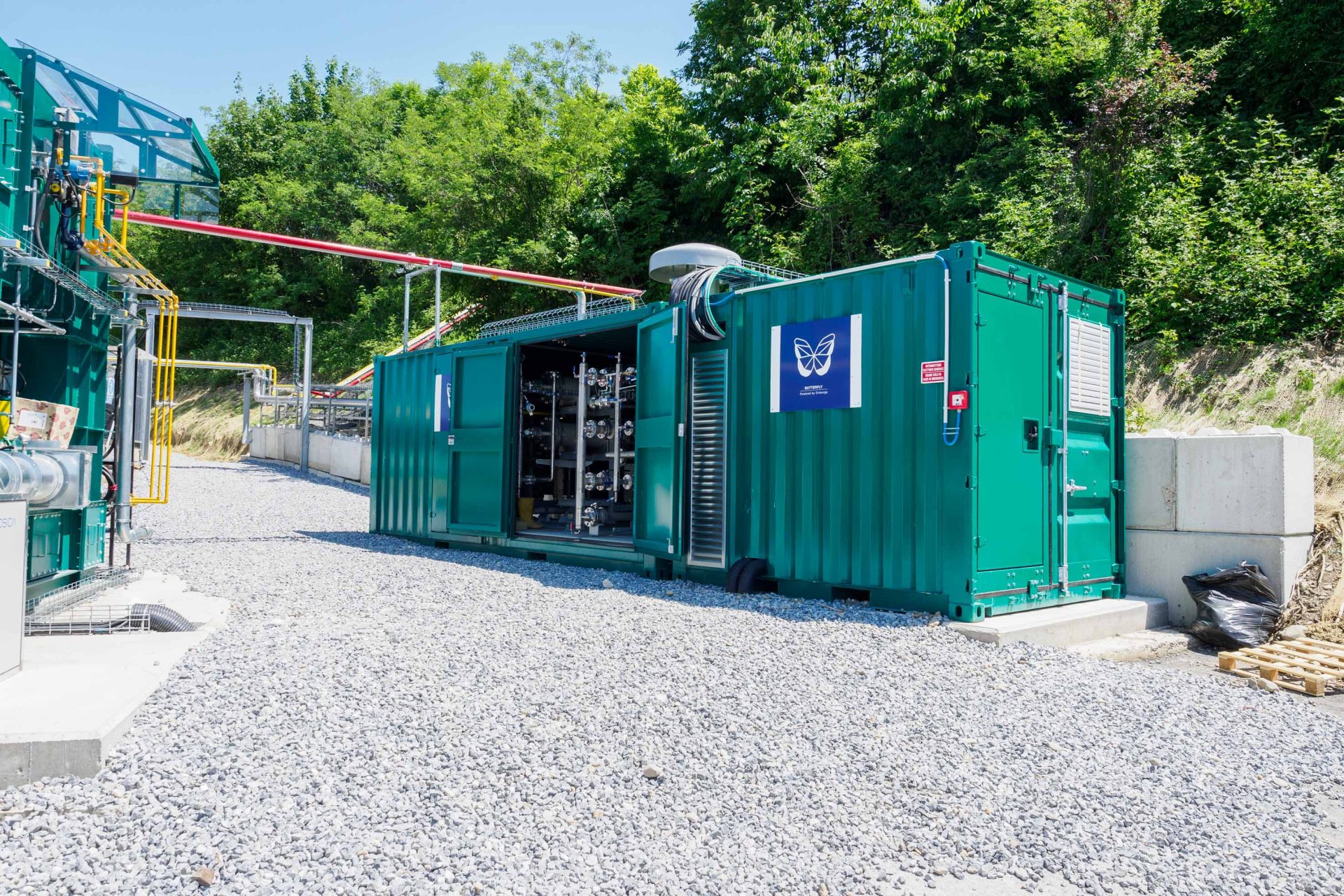


LARGELY FINANCED THROUGH ITALY’S NATIONAL RECOVERY AND RESILIENCE PLAN (PNRR), THE ACSR PLANT IN BORGO SAN DALMAZZO REPRESENTS A STRATEGIC HUB FOR WASTE MANAGEMENT ACROSS THE ENTIRE PROVINCE OF CUNEO. ENTSORGA CONTRIBUTED TO ITS TECHNOLOGICAL UPGRADING PROJECT BY ADDING AN ANAEROBIC DIGESTION SECTION: A REVAMPING THAT HAS MADE THE SYSTEM EVEN MORE EFFICIENT AND SUSTAINABLE, FURTHER REDUCING RELIANCE ON LANDFILL AND SIGNIFICANTLY INCREASING THE RECOVERY OF RENEWABLE ENERGY FROM ORGANIC WASTE.
THE COMPANY
Since 2008, the MBT and composting plant of ACSR (Azienda Cuneese di Smaltimento Rifiuti) has been a reference center for the management of waste, both sorted and unsorted, produced in 54 municipalities in the province of Cuneo, serving a total of approximately 160,000 inhabitants.
THE PROJECT
The redevelopment project, valued at approximately €16 million and funded by approximately €13 million from the National Plan for the Renewable Energy (PNRR), was awarded to Entsorga Spa in 2024 to further maximize the plant’s circularity: the treated waste will yield not only compost for soil fertilization, but also biogas, which, transformed into biomethane, will be fed into the grid and used as fuel for public transport.
ENTSORGA SOLUTION
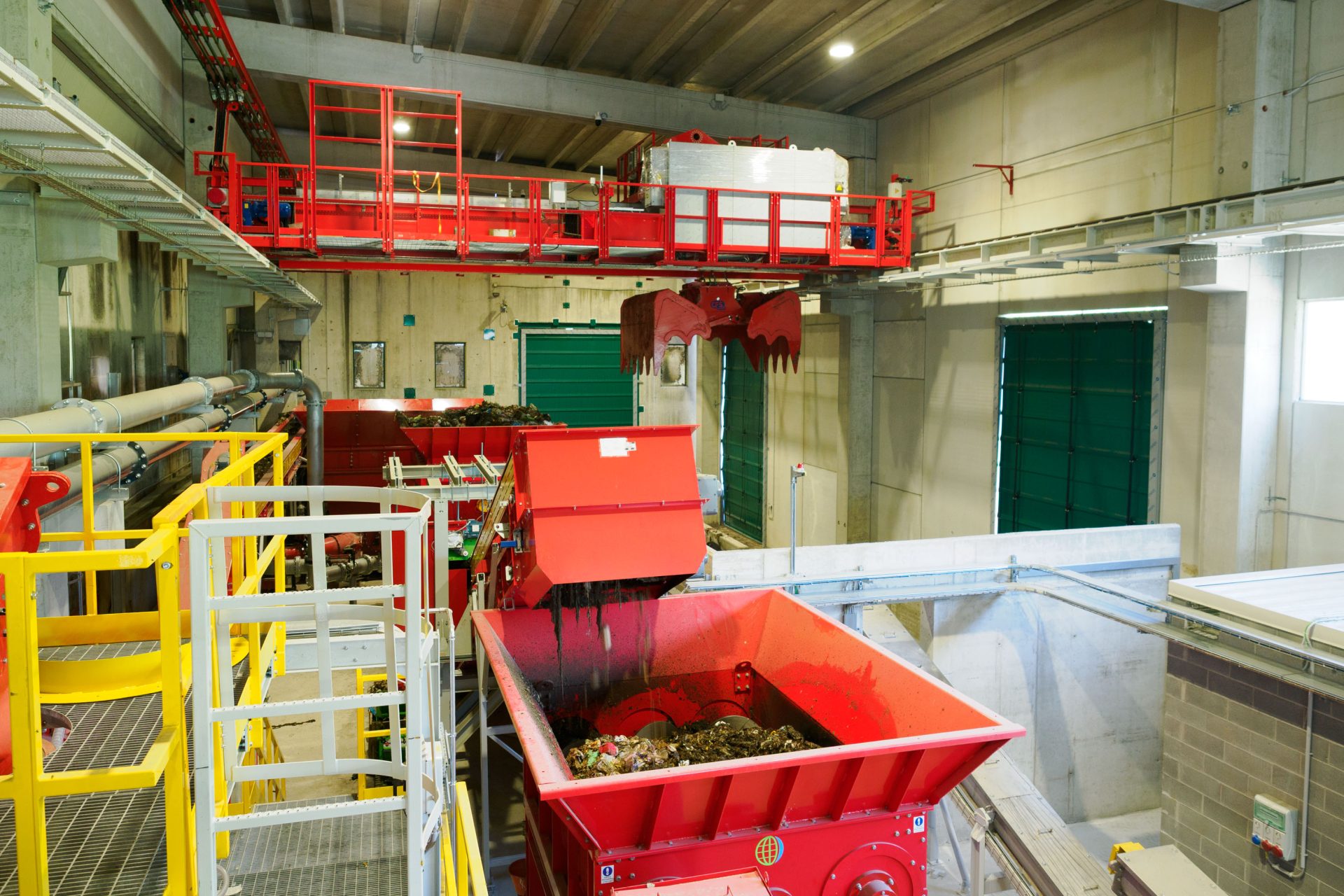
Entsorga handled the detailed design, installation, commissioning, and start-up of the plant. It owns all the key technologies for the new biomethane production line: the Spider™ robotic overhead crane, the pretreatment system, the Cow™ semi-dry plug-flow anaerobic digester, the Butterfly System for Biomethane Upgrading, biofiltration, Scrabble™ biocells, and the Eagle Cloud™ plant control and management systems.
THE ANAEROBIC DIGESTION LINE
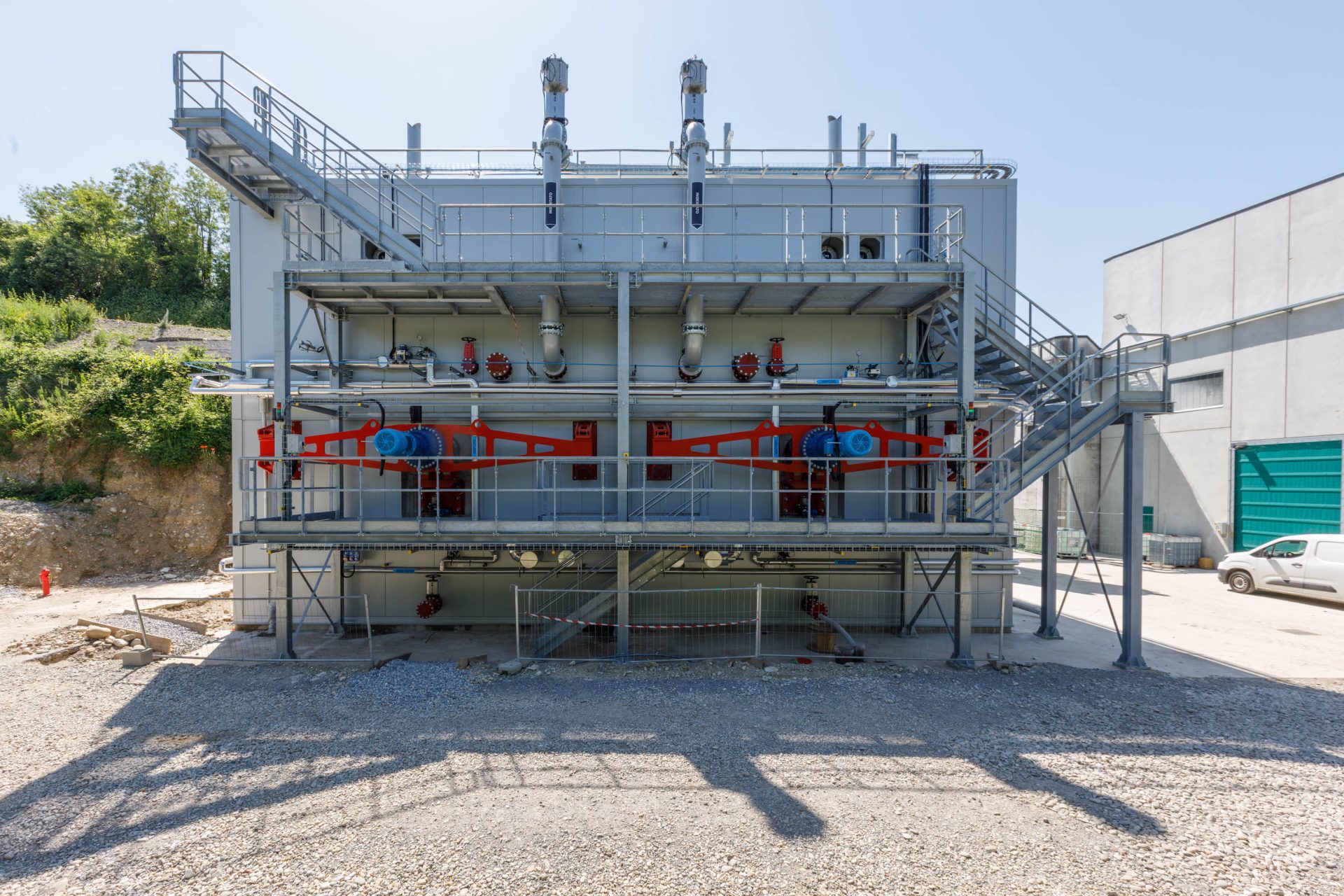
Anaerobic digestion is a natural complement to composting. The two processes are organized in series: in the first phase, the organic fraction undergoes mechanical pre-treatment (1) and hot biological degradation in the absence of oxygen in a horizontal “plug-flow” digester (2). The section is set up in a completely enclosed environment, ensuring improved process efficiency and reduced greenhouse gas and odor emissions.
The process produces biogas and an intermediate product, digestate. The digestate, mixed with a structuring substance consisting primarily of grass clippings and prunings, is then treated and transformed into compost, completing the waste recovery cycle. An upgrade system will extract 3.6 million cubic meters of biomethane from the biogas and feed it into the grid, equivalent to the energy needs of approximately 4,000 families.
The anaerobic digestion line was built entirely by Entsorga in Italy. The biodigester, including the agitator shaft, was designed by Entsorga, and the quality controls on incoming materials were performed by Entsorga.
THE COMPOSTING LINE
The organic fraction treatment line will annually recover approximately 35,000 tons of waste from the separate collection of household organic waste and plant material (grass clippings, prunings), producing approximately 11,000 tons of compost, which can be used for its properties in both conventional and organic agriculture. Thanks to the anaerobic digestion section, the “new” compost obtained from the digestate will be even more biologically stable and agronomically more humified, thus better meeting farmers’ needs.
The use of compost in agriculture is considered a practice of high ecological value in itself, encouraged by regional authorities because it enriches the soil with organic matter and promotes the progressive accumulation of carbon in the soil (carbon sink), an important function in combating the greenhouse effect.
STRENGTHS OF THE ANAEROBIC SECTION
- Total safety and minimal environmental and health impact: no odors or dust are released into the external environment. All operations are carried out indoors and at a slight pressure.
- Reduced management and labor costs: The plant’s complete automation reduces access to waste treatment areas, protecting health and ensuring operator safety.
- Low energy consumption thanks to the use of highly efficient equipment (Spider overhead crane).
- Maximum biogas production efficiency
- No need for a water purification system
- Minimum amount of waste sent to landfill (depending on the quality of the incoming waste)
- Highly automated Industry 4.0
- Limited space requirements